If you listen to audiobooks, someone has probably told you that "doesn't really count." Maybe you've wondered it yourself - especially when logging a book toward a reading challenge or adding it to your yearly total. Here's a clear answer, backed by what we know about how the brain processes stories.
The debate
The argument against audiobooks usually goes something like this: reading requires decoding written text with your eyes. Listening is passive. You don't "read" a podcast, so why would you "read" an audiobook?
The argument for: you absorbed the same story, the same ideas, the same words the author chose. Whether photons hit your retinas or sound waves hit your eardrums, you experienced the book. The rest is gatekeeping.
This matters practically because millions of readers track their books and set yearly goals. If you listened to 20 audiobooks this year, does your count say 20 or 0? The answer affects how you feel about your reading life.
What readers say about format tracking
This is one of the most discussed topics across reading communities. Readers who move between print, ebook, and audio throughout the day consistently say the same thing: the format depends on the situation, not the seriousness of the reading. Kindle at lunch, audiobook on the commute, paperback before bed. They want one coherent record of their reading life without having to justify which format counted. The frustration is not about whether audiobooks are "real reading." It is about apps and challenges that treat them as separate.
What the research says
Neuroscience research from the University of California, Berkeley found that the brain creates similar semantic maps whether processing written or spoken language. The same regions activate. The same meaning is extracted. The delivery method changes, but the comprehension doesn't - at least for narrative content.
A 2019 study published in the Journal of Neuroscience compared brain activity during reading and listening and found the neural responses were nearly identical across both formats for the same stories.
Where it gets more complicated: retention can differ depending on the material. For fiction and narrative nonfiction, audiobooks and print perform about the same. For dense, technical, or reference-heavy content - textbooks, instruction manuals, data-heavy reports - reading with your eyes tends to produce better recall because you can slow down, re-read, and reference specific passages.
When audiobooks work better
- Commuting. You can't hold a book on the train or while driving. Audiobooks turn dead time into reading time.
- Exercise and chores. Folding laundry, running, walking the dog - your eyes are busy, your ears aren't.
- Eye strain or fatigue. After eight hours at a screen, your eyes need a break. Your ears don't.
- Accessibility. For people with dyslexia, visual impairments, or other conditions that make print difficult, audiobooks aren't a shortcut - they're the primary format.
- Long books. A 700-page book is heavy to carry. At 12 hours of audio, you can get through it across a week of commutes.
- Performance adds value. A skilled narrator can bring characters to life in ways the printed page can't. Full-cast productions turn a book into something closer to theater.
When physical books work better
- Dense nonfiction. Books with data, charts, or complex arguments are easier to process when you can re-read a paragraph or flip back three pages.
- Books you want to annotate. Marginalia, highlighting, sticky tabs - these need a physical or digital page.
- Language learning. Seeing the spelling alongside hearing the pronunciation helps with retention.
- Before bed. No screen, no earbuds. A physical book and a lamp is a better wind-down routine than any device.
- Poetry. Line breaks, spacing, and visual layout are part of the work. Hearing a poem is valid, but you miss the structure the poet chose.
The real answer
Yes, audiobooks count.
If you listened to a novel and can tell someone what happened, who the characters were, and what you thought about it, you read that book. The format you used to get there is a personal preference, not a measure of legitimacy.
The major reading challenges agree. The 52 Book Club explicitly allows audiobooks. So does the PopSugar Reading Challenge and Book Riot's Read Harder. The 2026 reading challenges almost universally count any format - physical, ebook, or audio.
The average American reads 17 books per year. If half of those are audiobooks listened to during commutes that would otherwise be spent in silence, that's not cheating. That's making time for books.
Tracking both formats
Most book tracking apps count audiobooks the same as physical books. There's no separate category or asterisk. A book is a book.
PagePath tracks every book the same way regardless of format. Add it by scanning the ISBN or typing the title, rate it, set a status, and it shows up in your reading stats and yearly total. No distinction between "listened" and "read" - because there shouldn't be one.
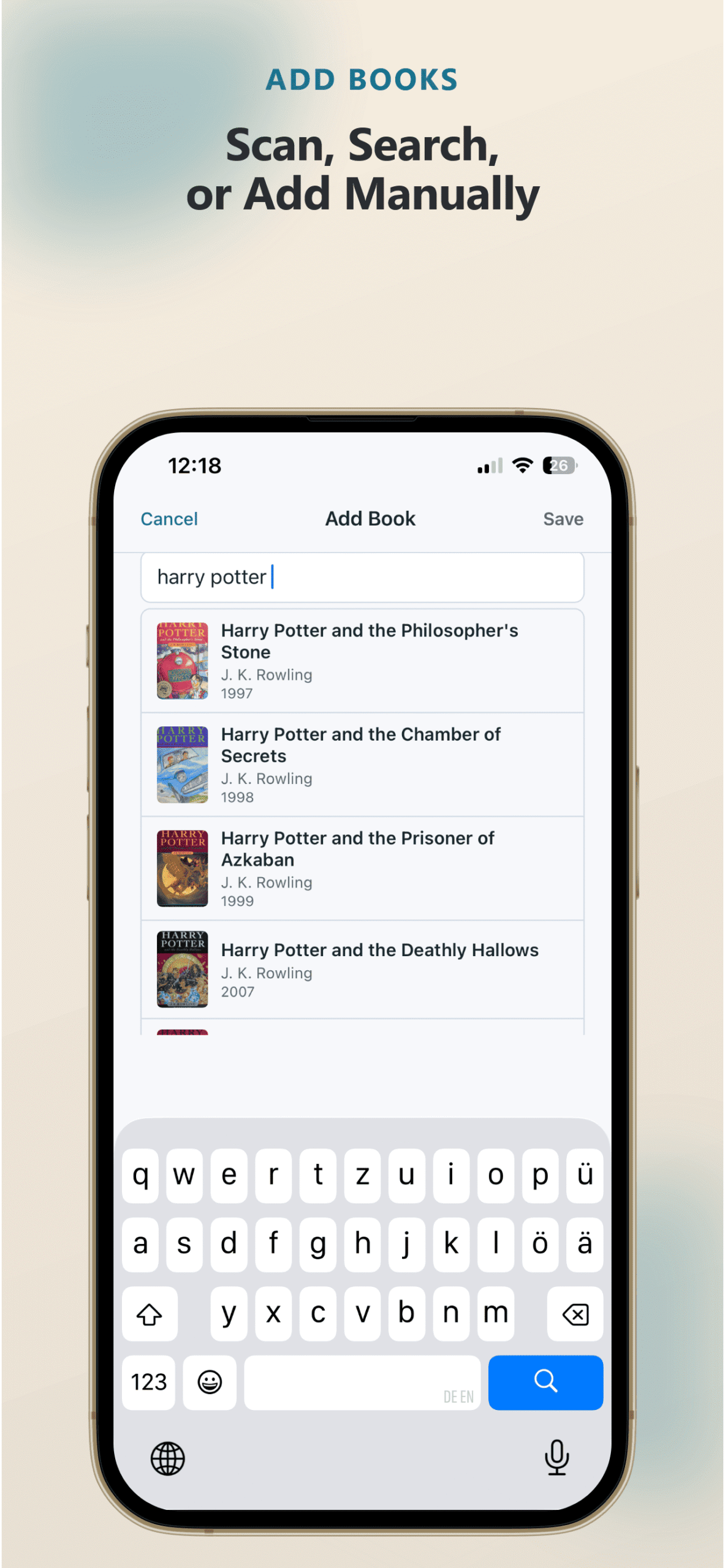
If you want to track which format you used for each book, you can add a tag ("audiobook", "ebook", "physical") and filter later. But your book count treats them all equally.
Frequently asked questions
"Fantastic app! I love finally seeing my books in a digital library. It's so easy to use; you just scan the ISBN and bam, the book is there."
Sabine on Google Play
Track every book - print, ebook, or audiobook
PagePath counts them all the same. No account, no subscription. Free for your first 25 books.
Part of our complete reading challenge guide.