What is a reading challenge?
A reading challenge gives your reading year a shape. Instead of vaguely promising to "read more," you pick a target - a number of books, a set of prompts, or a theme - and work toward it over weeks or months.
Some challenges are simple number goals: read 12, 26, or 52 books in a year. Others use creative prompts like "a book with a one-word title" or "a book set on a continent you've never visited." The point isn't pressure. It's direction.
Reading challenges work because they turn a solo habit into something structured. You're more likely to finish a book when it fits a prompt you chose, and you're more likely to try new genres when a challenge pushes you outside your usual picks.
Popular reading challenges in 2026
The 52 Book Club
52 prompts · Genre-flexible · 27,000+ members on Goodreads
One prompt per week for a year. Prompts range from specific ("a book with a color in the title") to broad ("a book that made you cry"). You pick any book that fits. The group runs on Goodreads, StoryGraph, Facebook, and Instagram, and members read in any language.
PopSugar Reading Challenge
50 prompts (40 regular + 10 advanced) · 11th year running
The most flexible major challenge. Prompts like "a book under 260 pages" or "a book centered around new beginnings" give you room to pick from books you already own. No sign-up required - just download the printable checklist from PopSugar and start reading.
Book Riot Read Harder
24 prompts (2 per month) · Diversity-focused
Read Harder pushes you toward authors and perspectives you might not find on your own. Prompts ask for books by intersex, deaf, or African authors, translated works, and genres outside your comfort zone. Two prompts per month keeps the pace manageable.
Around the World Reading Challenge
Read one book from every country or continent
Pick a scope that fits your year - one book per continent (7 books) or one per country on a list you choose. A good way to discover translated fiction and nonfiction you'd never find browsing bestseller lists. Most people do 20-30 countries at a comfortable pace.
Rory Gilmore Reading Challenge
339 books mentioned in Gilmore Girls · Multi-year challenge
Every book mentioned or shown in the TV series, compiled into one list. Nobody finishes this in a year - it's a long-term project. Heavy on classics and literary fiction. Popular with fans who like having a permanent reading list to dip into between other books.
A to Z Reading Challenge
26 books - one for each letter of the alphabet
Read a book whose title or author starts with each letter from A to Z. Simple rules, easy to track, and 26 books in a year works out to about one every two weeks. The letters Q, X, and Z make it interesting.
White House Reading Challenge
Second Lady Usha Vance's summer reading initiative
A newer challenge with a growing following. Focuses on summer reading with curated picks and community participation. Search interest has grown quickly since its launch.
Pick your pace
Not every challenge needs to be 52 books. Here's a rough guide to find the right number for your reading speed:
| Pace | Books / year | That's about | Good for |
|---|---|---|---|
| Casual | 12 | 1 book per month | People who read before bed a few nights a week |
| Moderate | 26 | 1 book every 2 weeks | Regular readers who want variety without pressure |
| Ambitious | 52 | 1 book per week | Dedicated readers, often mixing short and long books |
| Extreme | 100+ | 2 per week | Speed readers, audiobook listeners, or people who read full-time |
The average American reads about 17 books per year. If you read 12, you're reading. If you read 52, you're reading a lot. Both are fine. Pick the number that makes reading feel like a reward, not homework.
How to stay on track (without the guilt)
The most common reason people quit a reading challenge is falling behind and feeling like it's pointless to continue. Here's how to avoid that:
Start with a number you know you can hit. If you read 10 books last year, set your goal at 12 - not 52. You can always raise it mid-year. You can't un-disappoint yourself after quitting in April.
Track what you finish, not what you haven't started. A reading log or app that shows "8 books finished" feels better than a progress bar stuck at "15% of goal." Focus on what you've done.
Lower the number instead of quitting. If you're at 8 books in June and your goal was 52, change it to 20. Reading 20 books this year is better than reading 8 and feeling like you failed at 52.
Drop books you're not enjoying. A DNF (did not finish) is not a failure. It's a decision that frees up time for a book you'll actually want to read. Life is too short for books that feel like chores.
Reading challenges are supposed to make reading more fun - not less. If your challenge is stressing you out, the challenge is wrong, not you.
One pattern that keeps showing up in reading communities: challenges create momentum for the first few months, then the number starts controlling the reader. People pick shorter books to hit their target. They skip longer novels they actually want to read. Some stop reading entirely when they fall behind. The readers who finish their challenges are usually the ones who set a comfortable number and treat it as a direction, not a deadline. If you've hit this wall, you're not lazy. The goal just needs adjusting.
If you want a tracker that shows your progress without guilt or pressure, PagePath tracks books, pages, and reading goals with neutral framing - no "you're behind" messages, no streak shame. Set a yearly goal and watch it fill up at whatever pace works for you.
Challenge guides and resources
Reading Challenge 2026
Ideas, tracking tips, and free templates for this year's challenge.
Behind on Your Reading Challenge?
You're not failing. Here's how to keep going without the guilt.
Do Audiobooks Count as Reading?
What the research says, and how to track both formats in your challenge.
How to Set Reading Goals
Pick a number that works and track it without pressure.
Lesechallenge 2026 (DE)
Ideen, Tipps und wie du dranbleibst - auf Deutsch.
Looking for a way to track your books? See our complete guide to book tracking - apps, printables, and spreadsheets compared.
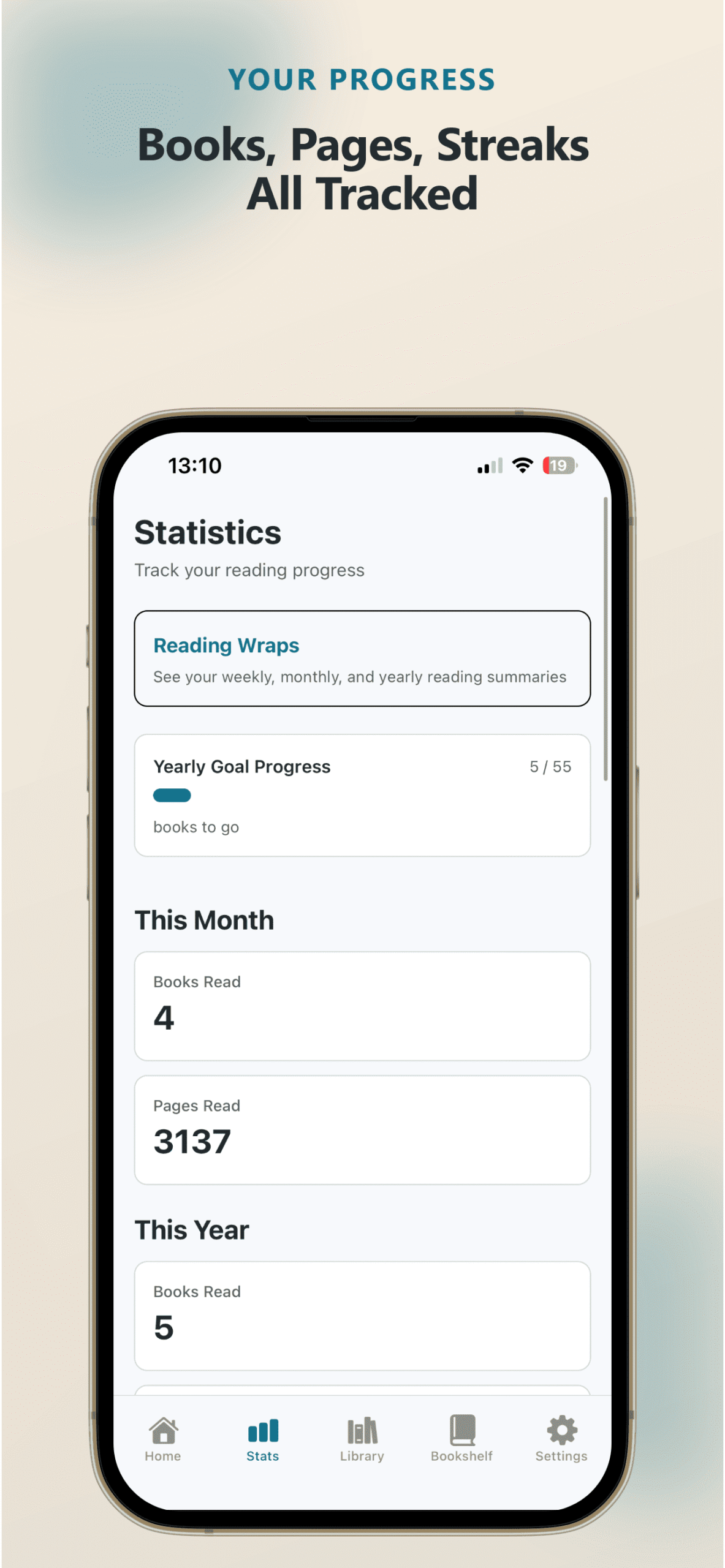
Track your challenge with PagePath
Set a reading goal, log each book as you finish it, and see your progress - all on your phone, with no account needed.