It's March. Or June. Or October. You set a reading goal in January and you're not where you thought you'd be. The number on your tracker feels like an accusation. You're thinking about giving up entirely.
You're not alone, and you're not failing. This article is about why reading challenges create that feeling, why the feeling is wrong, and what to do about it.
What readers describe in book communities
Reading goals and reading guilt come up constantly in book communities. The pattern is clear: goals motivate at the start, but the number starts controlling the reader instead of the other way around. Readers pick shorter books to inflate their count, skip challenging reads because they take too long, and feel worse about their reading life than they did before setting the goal. The readers who enjoy tracking the most tend to use their stats as a personal record, not a scorecard. If this turned into a full reading slump, that is a separate problem with separate solutions.
The March problem
January is full of energy. You pick 52 books because a book a week sounds doable. You sign up for a challenge, maybe two. You post your TBR on social media. You're excited.
By March, real life has shown up. Work gets busy. You started a 600-page book that's taking three weeks. You got sick for a week and didn't read at all. You open your tracker and see "8 of 52" and the math feels impossible.
This is the March problem. It happens to almost everyone who sets an annual reading goal. The people posting "I've read 20 books already!" on BookTok are the exception, not the norm. They're just louder.
Why reading challenges create guilt
Reading challenges are supposed to motivate you. But three things quietly turn them into pressure:
1. The number is arbitrary
52 books a year is a nice round number. It has nothing to do with your life, your schedule, or the kind of books you read. Someone reading 200-page romance novels and someone reading 800-page nonfiction are on completely different scales. The same number doesn't make sense for both.
2. Social media creates a false baseline
BookTok and Bookstagram show people who read 100+ books a year. They don't show people who read 12 and loved every one. The people reading at a normal pace don't make content about it because "I read two books this month" doesn't go viral.
3. Some trackers punish you for slowing down
Apps that show broken streaks in red, or tell you "you're 5 books behind schedule," or compare you to other users are treating reading like a fitness competition. Reading isn't a competition. It's the opposite of one.
Reading 15 books is not failing
The average American reads about 17 books per year. In Germany, it's closer to 6. In many countries, finishing even 5 books in a year puts you well above average.
If you set a goal of 52 and hit 15, you didn't fail at reading. You read 15 books. That's 15 books' worth of ideas, stories, and time spent doing something better than scrolling.
The problem was never your reading. The problem was the number.
A reading challenge works when it pushes you to read a little more than you would have otherwise. It stops working the moment it makes you feel bad about what you did read.
How to rescue a challenge you're behind on
You don't have to quit. You also don't have to white-knuckle your way to 52. Here are five things that actually help:
Lower the number
There is no shame in changing your goal from 52 to 24, or from 24 to 12. You're adjusting to reality, not quitting. A goal you actually hit feels better than one that hangs over you all year.
Switch to pages
Counting pages instead of books removes the penalty for reading longer books. A 600-page novel counts as 600 pages of progress, not as "still on book one." Some trackers, including PagePath, show both books and pages so you can see progress either way.
Count everything
Audiobooks count. Graphic novels count. Novellas count. Rereads count. Poetry collections count. If you engaged with a book from start to finish, it's a book. Don't let someone else's definition of "real reading" shrink your list.
Drop books you don't enjoy
A book you're forcing yourself through is slowing you down and making reading feel like homework. Put it down. Mark it as DNF. Pick something you're actually excited about. Life is too short to finish bad books out of obligation.
Read something short to rebuild momentum
If you've been stuck, pick up a 150-page book you've been curious about. Finishing something - anything - reminds you that you're a reader. Momentum comes from completion, not from starting another 500-page book.
For more ideas on setting goals that stick, see our guide on how to set reading goals you'll actually finish. And if you're looking for a structured challenge, we have a roundup of popular reading challenges for 2026.
What a good tracker looks like
The tool you use to track your reading shapes how you feel about your reading. A tracker that shows a red broken streak or says "you're behind schedule" is doing the opposite of what it should.
A good reading tracker:
- Shows what you've read, not what you haven't
- Celebrates milestones without comparing you to anyone
- Tracks pages and time, not just books
- Lets you adjust your goal without making it feel like a downgrade
- Never uses the words "behind" or "failed"
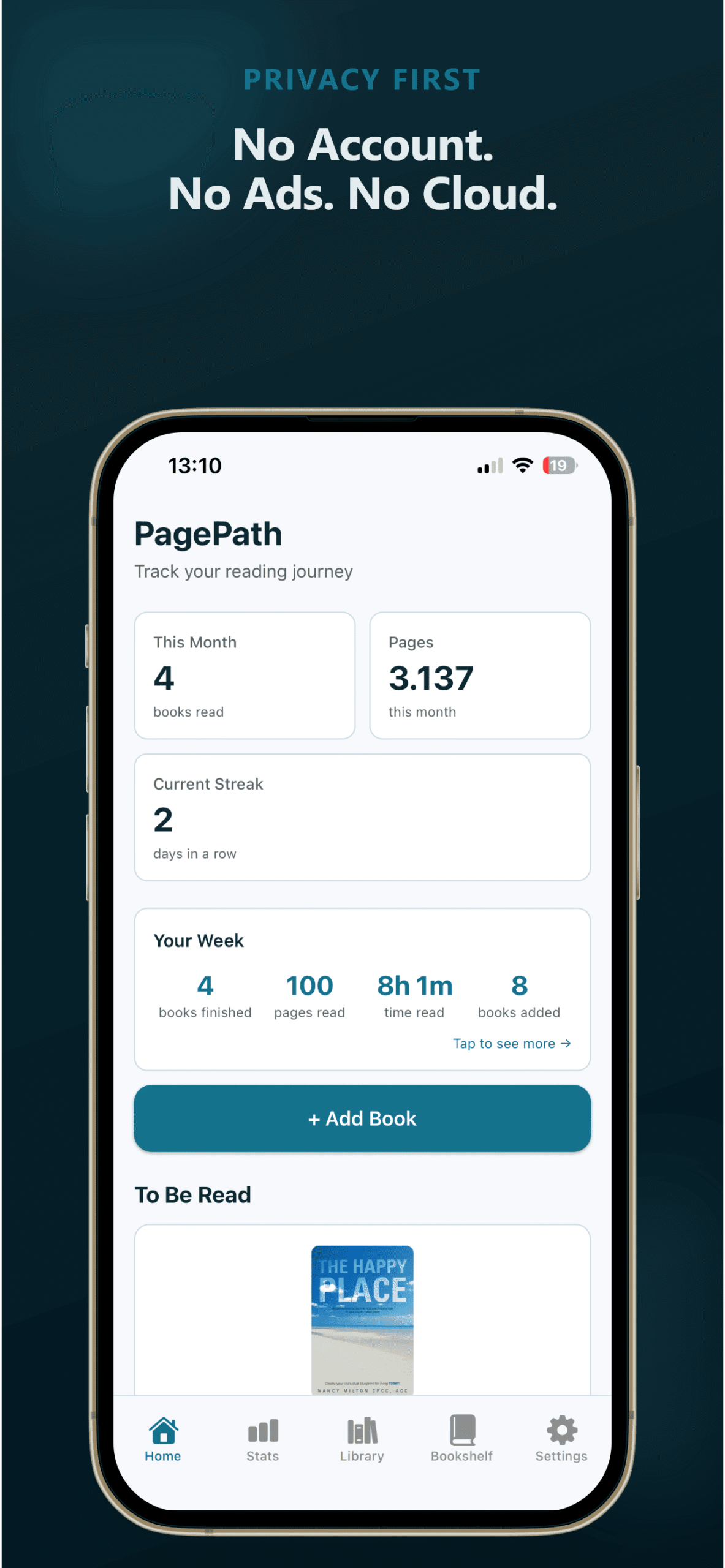
PagePath was built with this in mind. It shows books finished, pages read, and reading time. It celebrates milestones at 5, 10, 25, 50, and 100 books with a short, warm message. It never tells you that you read less than last week or that your streak is broken. Your reading wraps show what you accomplished, not what's left.
If you prefer paper, a printable reading log does the same thing without any numbers staring back at you. Write down what you finished and move on.
Frequently asked questions
Track your reading without the guilt
PagePath shows what you've read, not what you haven't. No streak shame, no "behind schedule" warnings. Just your books and your progress.
Part of our complete reading challenge guide.