You still like reading. You still want to read. You just can't seem to start. Every time you pick up a book, you read three pages and put it down again. Your TBR pile grows. The guilt grows with it. This is a reading slump, and almost every reader goes through one.
Reading for pleasure has dropped measurably. The American Time Use Survey shows Americans reading daily for personal interest fell from 28% in 2004 to 16% in 2023. Average books read per year dropped from about 18 in 1999 to roughly 8 in 2024, according to Gallup and YouGov polling. Reading slumps are not a personal failure - they are part of a broader cultural shift in how people spend their attention.
What a reading slump actually is
A reading slump is not losing interest in reading. It is losing momentum. You know the difference because during a slump you still browse bookstores, still save recommendations, still think about reading. You just do not do it.
It is not a character flaw. It is not laziness. It happens to people who read five books a month and people who read five books a year. The duration varies - some slumps last a week, some last months. Both are normal.
Why it happens
Reading slumps usually come from one of these places:
- Forcing books you do not enjoy. You started something because you felt you should, and now reading feels like homework.
- Decision fatigue. Too many options. Your TBR has 200 books and you cannot pick one, so you pick none.
- Screens winning. Your phone is always closer than your book. Scrolling takes less effort than concentrating. The American Psychological Association reported in 2023 that excessive screen use is linked to reduced attention and lower reading comprehension, particularly among younger adults.
- Life getting busy. Work, family, stress. Reading requires mental bandwidth, and sometimes there is none left.
- Post-series void. You finished something you loved and nothing else feels worth starting.
- Reading burnout. You went through a stretch of reading too much too fast - binge-reading a series or pushing through a challenge - and your brain needs a break. This is different from losing interest. It is fatigue from overuse.
Knowing which one applies to you helps you pick the right fix from the list below.
What readers describe in book communities
The most common pattern is decision overload, not a lack of interest. Readers in a slump still browse bookstores, still save recommendations, still want to read. They just cannot start. Across dozens of reading communities, the advice that comes up the most is to make the next choice smaller. Not "find the perfect book" but "pick anything and read ten pages." The slump usually breaks once the first small decision is made.
9 things that actually help
1. Reread an old favorite
Zero risk, guaranteed enjoyment. You already know you like it. Rereading is not wasted time - it rebuilds the habit of sitting down with a book, which is the part you lost.
2. Try a completely different format
If you read physical books, try an audiobook on your commute. If you read literary fiction, try a graphic novel. A format switch sidesteps whatever mental block you built around "reading" and replaces it with something that feels new.
3. Read something short
Under 200 pages. A novella, a short story collection, a memoir. Finishing a book - any book - rebuilds momentum faster than starting a 500-page novel and stalling on page 40.
4. Let someone else pick
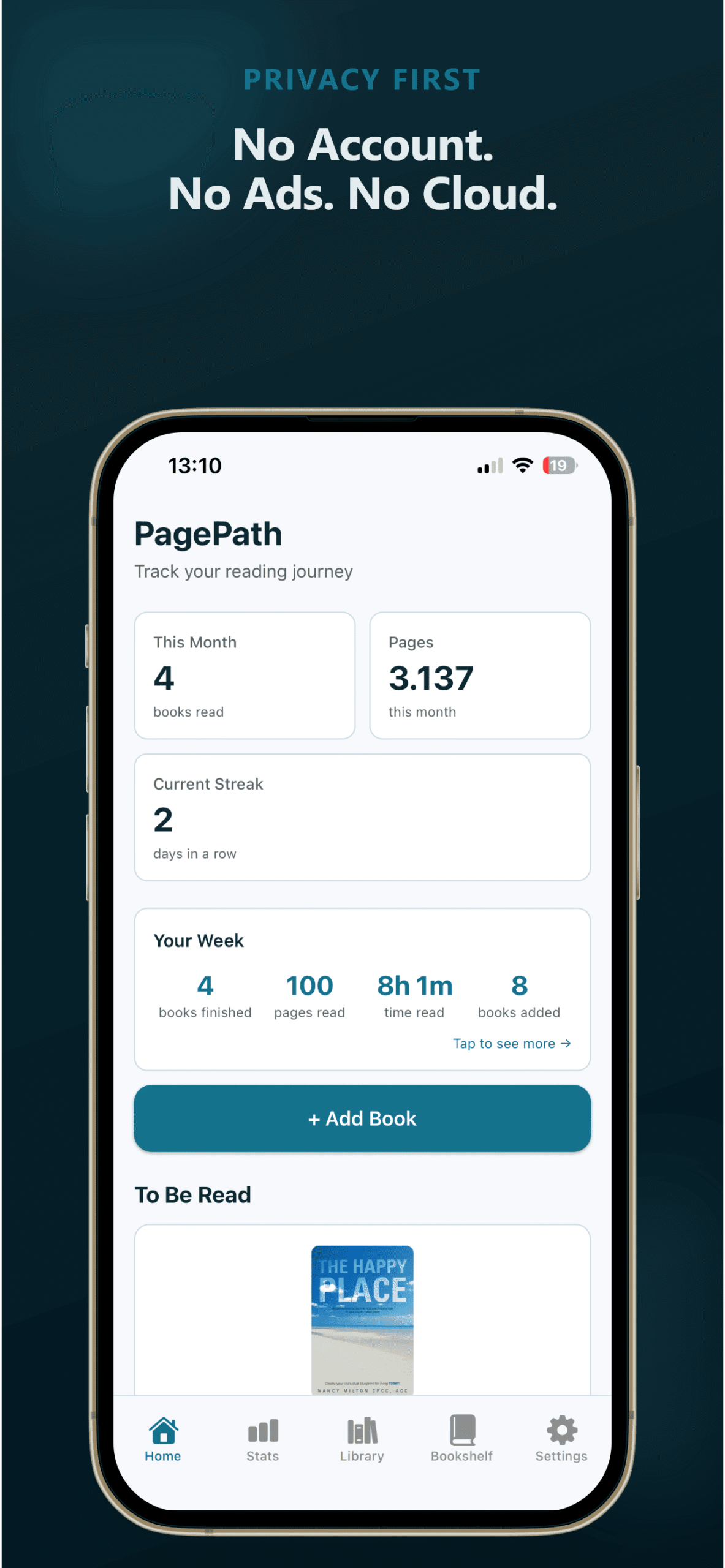
If decision fatigue is the problem, remove the decision. Ask a friend what they last enjoyed. Use a random picker on your TBR list. PagePath has a TBR Roulette feature that picks a random book from your pile - sometimes removing the choice is all it takes.
5. Lower the stakes
Stop rating books. Stop tracking pages. Stop thinking about your reading challenge number. Read for no purpose other than to read. You can go back to tracking once the slump breaks.
6. Change where you read
If you always read in bed, try a park bench. If you always read at home, try a cafe. A new environment breaks the association between "this spot" and "I should be reading but I am not."
7. Set a tiny goal
Ten pages. Not a chapter, not 30 minutes, not "until I feel like stopping." Ten pages. Most of the time you will read more. But if you stop at ten, that still counts. Small goals work better than ambitious ones when you are rebuilding a habit.
8. Stop the book you are stuck on
DNF - did not finish - is not quitting. It is making room for a better book. If you have been on page 80 for three weeks, the book is the problem, not you. Put it down. You can always come back to it later, or never.
9. Give yourself permission to stop
This sounds counterintuitive, but reader communities consistently recommend it: choose to take a break from reading entirely for a set period. Not a guilty absence where you avoid your bookshelf - a deliberate decision. "I am not reading this month." The difference matters. When the break is chosen, the guilt disappears, and most readers come back naturally when the pressure lifts.
What not to do
- Do not buy more books. A new book haul feels productive, but adding to a TBR you already cannot face makes the problem worse, not better.
- Do not start with a 600-page classic. Now is not the time for War and Peace. Save it for when you have momentum again.
- Do not compare yourself to BookTok. The person who reads 100 books a year reads differently than you. That is fine. Some of those numbers include novellas, rereads, and DNFs counted as read. Comparison helps nobody.
The common thread: do not add pressure. Pressure is what caused the slump. More pressure does not fix it.
When the slump breaks
You will know. It is usually one book that does it - something you did not expect to love, or a reread that reminded you why you started. You finish it and immediately want to start something else. That is the signal.
Reader communities describe this as a near-universal experience - one unexpected book that reignites everything. It is rarely the book you planned to read. It is the one you picked up on impulse, or the one a friend handed you, or the audiobook you started because you were bored on a drive.
When it happens, ride the momentum. Start the next book the same day if you can. The first few books after a slump tend to go fast because the appetite is back.
If you want to track your comeback, a simple reading tracker can help you see the progress. Not for pressure - for proof that you came back from it.
PagePath's TBR Roulette picks a random book when you cannot decide. Sometimes that is all it takes to start reading again.
Try PagePath freeOne more thing: if a reading slump lasts months and comes alongside a broader loss of motivation or enjoyment in things you used to like, that might be worth talking to someone about. Reading slumps are normal. Sustained inability to enjoy anything is different.
Frequently asked questions
Track your reading at your own pace
PagePath tracks what you have read without making you feel bad about what you have not. No streaks. No guilt. Just your books.